What to Do When You Can’t Sleep: A Calm, Step-by-Step Plan
What to do in the moment when sleep won't come, plus the longer-term techniques behind CBT-I, the recommended treatment for chronic insomnia.

Lying awake at night is miserable. The house is quiet, the clock seems to move too fast, and every minute you’re not asleep adds to the worry about tomorrow. If that sounds familiar, you’re far from alone. Trouble sleeping is one of the most common health complaints.
The good news is that there are clear, evidence-based steps for both the night itself and the longer term. This guide covers what to do in the moment, what to do the next day, and when and how to get proper help.
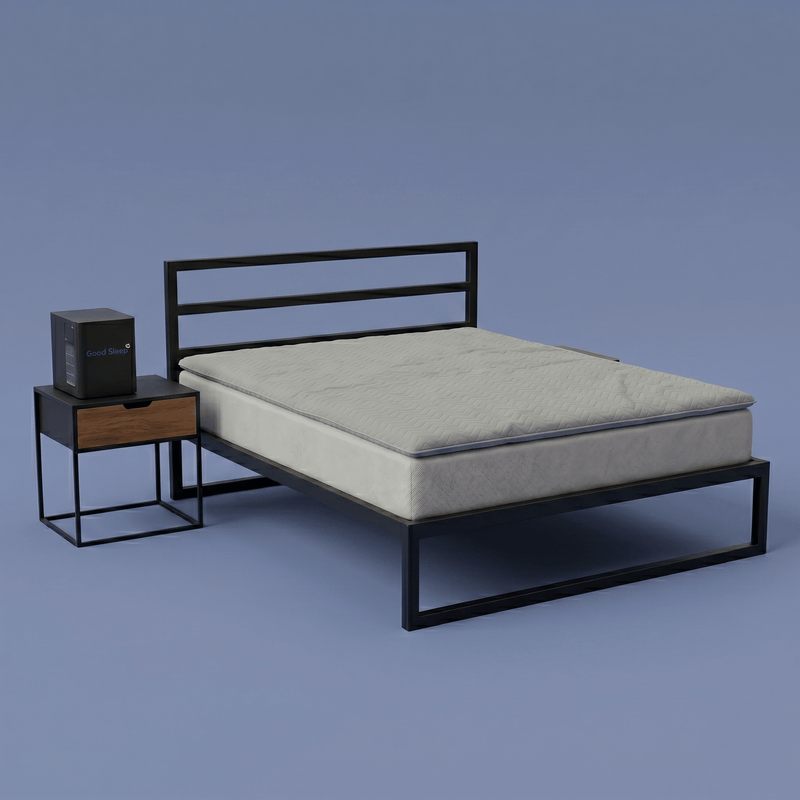
Good Sleep cooling and heating mattress topper
A water-based mattress topper that cools to 62°F and heats to 110°F and fits on top of the mattress you already have. Simple touch-panel control with no app, Wi-Fi or subscription. Dual zone on King.
Shop nowFirst: don’t fight it
Sleep is one of the few things that gets harder the more you try. Effort and frustration raise alertness, which is the opposite of what you need. A useful mindset is to stop trying to force sleep and focus instead on resting calmly and letting sleep come when it’s ready.
It also helps to remember that one bad night, while unpleasant, is usually manageable. Many people find they cope better the next day than they feared at 3 a.m.
What to do in bed
If you’re lying awake, try these first:
- Turn the clock away. Checking the time adds pressure and calculation (“If I fall asleep now, I’ll get four hours…”).
- Try slow breathing. Breathe in gently through your nose for a count of four, and out for a count of six. Repeat for a few minutes.
- Relax your body in sections. Progressive muscle relaxation involves tensing and then releasing muscle groups one at a time, from your feet upwards.
- Give your mind something boring to do. Some people find it helps to think through a dull, neutral task, like mentally listing animals for each letter of the alphabet.
- Check your comfort. Too hot, too cold, a noise or a sore spot can keep you awake. Adjust a layer or move the pillow.
When to get up
If you’ve been lying awake for what feels like a long time, often described as around 20 minutes, and you’re getting frustrated, get up. Don’t watch the clock to time it; just go by how it feels.
- Go to another room or a different spot that’s dim and comfortable.
- Do something calm and low-stimulation: read a dull book, listen to quiet music, fold laundry.
- Keep the lights low and avoid screens if you can.
- Return to bed when you feel sleepy, not just tired.
- Repeat if needed.
This technique, called stimulus control, is one of the core parts of cognitive behavioural therapy for insomnia (CBT-I). The aim is to stop the bed from becoming a place associated with frustration and wakefulness.
What to avoid at night
- Screens and social media. They’re designed to be engaging, which is the opposite of what you want.
- Working or problem-solving. If something is on your mind, jot it down and promise yourself you’ll deal with it tomorrow.
- Alcohol or extra medicines that weren’t prescribed for sleep. See caffeine, alcohol and sleep.
- Eating a large snack. If you’re truly hungry, a small light snack is fine.
What to do the next day
After a bad night, it’s tempting to sleep in, nap for hours and go to bed early. Unfortunately, all three can make the next night harder. Instead:
- Get up at your usual time. This protects your body clock. See how to build a consistent sleep schedule.
- Get morning light. Head outside soon after waking. See morning light and sleep.
- Keep any nap short and early, if you nap at all. See our napping guide.
- Keep caffeine to the morning.
- Stay active. A walk can help you feel better and build sleep pressure for the night.
- Go to bed when sleepy, not hours early.
Calming a racing mind
Worry is one of the most common reasons people can’t sleep. Some techniques that help:
- Scheduled worry time. Set aside 10 to 15 minutes in the late afternoon or early evening to write down worries and possible next steps. When worries pop up at night, remind yourself they’ve already been dealt with or have a time slot tomorrow.
- A to-do list before bed. Writing tomorrow’s tasks down may help you let go of them.
- Challenge unhelpful thoughts. Thoughts like “I’ll never sleep again” or “tomorrow will be a disaster” are common at night but usually not accurate. Gently replacing them with more balanced ones, such as “I’ve managed after bad nights before”, can reduce anxiety.
If anxiety or low mood is affecting your sleep a lot, talk to a doctor. Treating those conditions often improves sleep too.
The longer-term fix: CBT-I
If you have trouble sleeping at least three nights a week for three months or more, and it affects your daytime life, that’s often described as chronic insomnia. Major medical organisations, including the American College of Physicians, recommend cognitive behavioural therapy for insomnia (CBT-I) as the first-line treatment for adults.
CBT-I usually includes:
| Component | What it involves |
|---|---|
| Stimulus control | Using the bed only for sleep and intimacy; getting up when you can’t sleep |
| Sleep restriction or compression | Temporarily limiting time in bed to match actual sleep, then gradually extending it |
| Cognitive techniques | Addressing unhelpful thoughts and worries about sleep |
| Sleep hygiene | Habits and environment, as in our sleep hygiene checklist |
| Relaxation | Breathing, muscle relaxation and other calming techniques |
Sleep restriction in particular should ideally be done with guidance, because it can make you sleepier in the short term and isn’t suitable for everyone, for example people with certain medical conditions or jobs where drowsiness is dangerous.
CBT-I is available from trained clinicians, and there are also structured digital programmes. Ask your doctor what’s available near you.
What about sleeping pills?
Some medicines can help with sleep in the short term, but they can have side effects and aren’t usually recommended as the first or only long-term treatment for insomnia. Over-the-counter sleep aids can also cause next-day drowsiness. Don’t start, stop or change any medicine without talking to a doctor or pharmacist.
When to see a doctor
See a doctor if:
- You have trouble sleeping most nights for several weeks.
- You feel very sleepy during the day or have nodded off while driving.
- You snore loudly, gasp or stop breathing during sleep.
- You have uncomfortable leg sensations at night.
- Your sleep problems started with a new medicine or health change.
- You’re feeling low, anxious or hopeless.
Common mistakes
Spending longer in bed to catch up. It feels logical, but extra time in bed often means more time awake, which weakens the link between bed and sleep.
Clock-watching. It turns sleep into a countdown.
Relying on alcohol. It may help you drift off but disturbs sleep later in the night.
Waiting too long to get help. Insomnia is common and treatable. You don’t have to just put up with it.
A sample plan for a tough week
If you’re going through a run of bad nights, here’s a simple plan to follow for a week:
- Every morning: Get up at the same time, regardless of how you slept. Go outside for some light.
- During the day: Stay active, keep caffeine to the morning and avoid long naps.
- Late afternoon: Spend ten minutes writing down worries and tasks.
- Evening: Dim the lights and follow a calm wind-down routine.
- Bedtime: Go to bed only when you feel sleepy. If you can’t sleep and feel frustrated, get up and do something calm until you’re sleepy again.
Write a short note each morning about how you slept. If things haven’t improved after a few weeks, or they’re getting worse, book an appointment with your doctor and bring your notes.
Key takeaways
- Don’t try to force sleep; focus on calm rest.
- Turn the clock away and use slow breathing or muscle relaxation.
- If you’ve been awake for a long time and feel frustrated, get up and return when sleepy.
- Keep your wake time steady the next day.
- For chronic insomnia, CBT-I is the recommended first-line treatment.
Related guides
If you found this useful, these guides go deeper on closely related topics:
- Eating and Drinking Before Bed: What Helps, What Hurts: meal timing, snacks and evening drinks.
- How to Get Good Sleep: A Practical, No-Hype Guide: our main guide to getting good sleep, with the habits that matter most and the order to try them.
- How to Build a Consistent Sleep Schedule (and Actually Keep It): how to anchor your wake time and shift your schedule without misery.
- Morning Light and Sleep: The Free Habit That Resets Your Body Clock: how daylight resets your body clock, even on busy or grey days.
Each one sticks to the same approach as this article: practical steps, plain language and no miracle cures. Pick the one that matches the part of your sleep you most want to improve, try one change at a time and give it a couple of weeks.
A cool, comfortable bed helps you stay asleep through the second half of the night. Water-cooled toppers keep the sleep surface cool all night; if you want to try one, see how it works.
Frequently asked questions
Why can’t I sleep even though I’m tired?
Being tired and being sleepy aren’t quite the same. Stress, worry, a busy mind, caffeine, an irregular schedule and a bedroom that’s too warm or bright can all keep you alert even when you feel exhausted.
Should I get out of bed if I can’t sleep?
If you’ve been awake for what feels like a long time and you’re getting frustrated, yes. Go somewhere dim and calm, do something relaxing and return when you feel sleepy.
Is it OK to look at my phone if I can’t sleep?
It’s best to avoid it. The light and the content can make you more alert. A dull book or quiet audio is a better choice.
How do I know if I have insomnia?
Trouble falling or staying asleep, or waking too early, on at least three nights a week for three months, along with daytime effects, is a common definition of chronic insomnia. A doctor can assess it properly.
Does CBT-I really work?
CBT-I is recommended as the first-line treatment for chronic insomnia by major medical organisations, based on a large body of research. It takes some effort over several weeks, but many people find the benefits last.