The Sleep Hygiene Checklist: 15 Habits Worth Keeping
A printable-style checklist of everyday habits that support better sleep, grouped by morning, daytime, evening and bedroom.

“Sleep hygiene” sounds clinical, but it simply means the everyday habits and surroundings that make good sleep more likely. It is not a treatment for sleep disorders on its own, and clinicians are careful to say so. But for most people with ordinary, on-and-off sleep trouble, getting these basics right is the foundation everything else rests on.
This checklist groups the habits by time of day so you can see where the gaps are. You do not need to tick every box. Pick the two or three that feel most doable and start there.
How to use this checklist
Read through each section and mark each habit as one of three things: already doing it, could start this week, or not realistic right now. Then choose no more than three from the middle column. Small, steady changes stick far better than a dramatic overhaul.
Revisit the list after a month. Habits that felt impossible at first often become easy once the earlier ones are in place.
Morning habits
1. Get up at the same time every day. A steady wake time is the anchor for your body clock. Keep it within about an hour on weekends. Our guide to building a consistent sleep schedule explains why this matters so much.
2. Get bright light soon after waking. Outdoor light, even on a cloudy day, is much brighter than indoor lighting and helps set your internal clock. Open the curtains, step outside or have breakfast by a window. See morning light and sleep.
3. Don’t snooze repeatedly. Hitting snooze again and again gives you fragmented, low-quality extra minutes. If you regularly need several snoozes, it is usually a sign that you need an earlier bedtime rather than more alarms.
4. Have a regular breakfast time if it suits you. Meal timing is one of several cues your body uses to keep time. You do not need a big breakfast, but eating at roughly the same time each day can help some people feel more regular.
Daytime habits

5. Set a caffeine cut-off. Caffeine can stay active in your body for many hours. A common starting point is to stop by early afternoon, then adjust based on how you sleep. Our guide on caffeine, alcohol and sleep has more detail.
6. Move your body. Regular physical activity is linked with better sleep in many studies. Walking counts. If you find late, intense workouts keep you awake, shift them earlier. See exercise and sleep.
7. Keep naps short and early. A short nap of around 20 minutes in the early afternoon can be refreshing. Long or late naps can reduce sleep pressure and make it harder to fall asleep at night. Our napping guide covers the trade-offs.
8. Deal with worries before bedtime. If your mind tends to race at night, set aside ten minutes in the late afternoon or early evening to write down what is on your mind and any next steps. It is easier to let thoughts go at bedtime when they are already on paper.
Evening habits
9. Finish large meals a few hours before bed. Eating a heavy meal right before lying down can cause discomfort or reflux for some people. A small snack is usually fine if you are hungry. See eating and drinking before bed.
10. Leave a gap between alcohol and bedtime. Alcohol can make you drowsy, but it tends to fragment sleep later in the night. If you drink, having your last drink earlier in the evening is a simple change to try.
11. Dim the lights. In the last hour or two before bed, use lamps instead of bright overhead lights where you can. This gives your brain a clear signal that the day is ending.
12. Follow a short wind-down routine. Thirty to sixty minutes of calm, repeated activities, such as reading, a warm shower, stretching or breathing exercises, helps your mind shift gears. We share examples in how to build a bedtime wind-down routine.
Bedroom habits
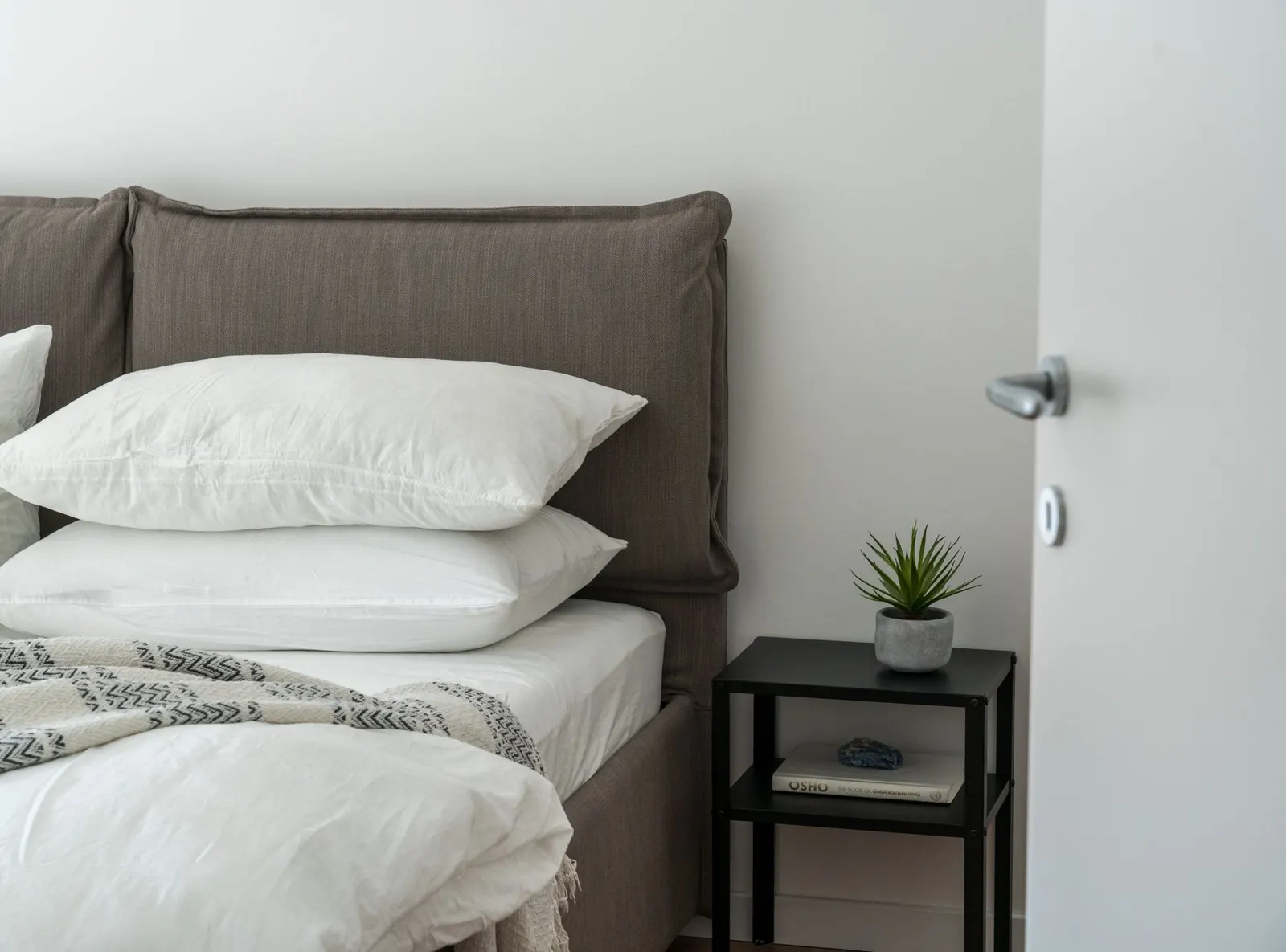
13. Keep the room cool, dark and quiet. Most people sleep better in a room on the cool side. Blackout curtains or an eye mask help with light, and earplugs or a steady fan sound can mask noise. See the best bedroom temperature for sleep.
14. Save the bed mainly for sleep. Working, scrolling or watching tense shows in bed can teach your brain to associate it with being alert. Keeping the bed mostly for sleep and intimacy strengthens the link between bed and rest.
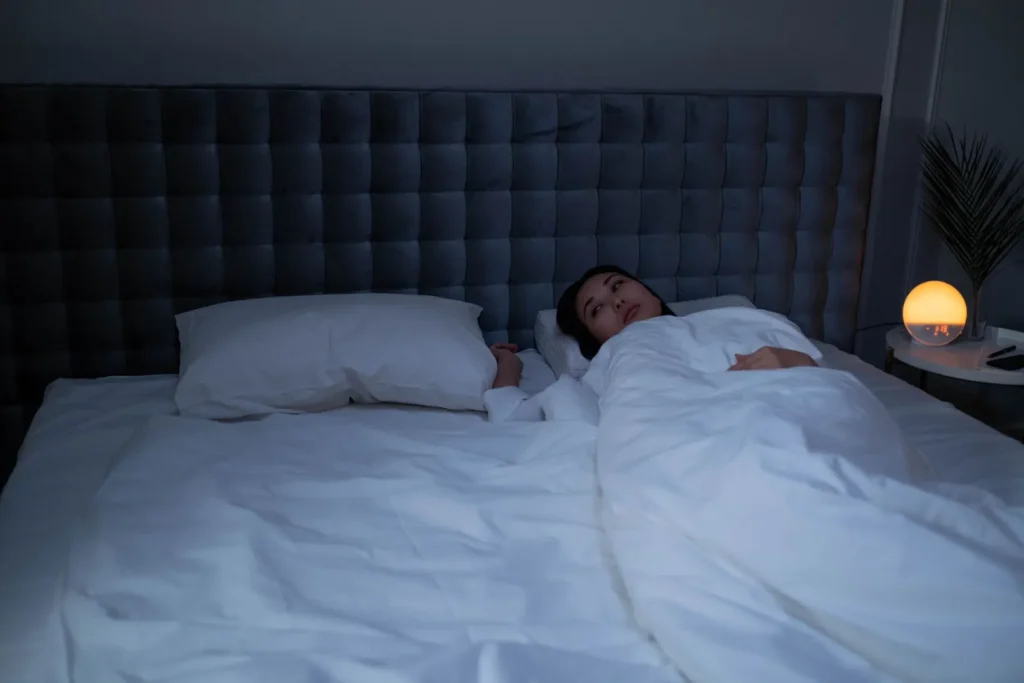
15. Don’t lie awake for ages. If you cannot sleep and you are getting frustrated, get up, go somewhere dim and quiet, do something calm, and return to bed when you feel sleepy. This advice comes from cognitive behavioural therapy for insomnia (CBT-I). More in what to do when you can’t sleep.
The checklist at a glance
| Time of day | Habit | Why it helps |
|---|---|---|
| Morning | Same wake time daily | Anchors your body clock |
| Morning | Bright light early | Strongest signal for your internal clock |
| Morning | Skip repeated snoozing | Avoids fragmented, poor-quality extra sleep |
| Morning | Regular breakfast time | Adds another timing cue |
| Daytime | Caffeine cut-off | Reduces caffeine still active at bedtime |
| Daytime | Regular movement | Linked with better sleep quality |
| Daytime | Short, early naps | Protects night-time sleep pressure |
| Daytime | Worry time | Clears your head before bed |
| Evening | Earlier big meals | Less discomfort when lying down |
| Evening | Gap after alcohol | Less broken sleep later in the night |
| Evening | Dim lights | Signals the day is ending |
| Evening | Wind-down routine | Helps the mind shift gears |
| Bedroom | Cool, dark, quiet | Fewer disruptions |
| Bedroom | Bed mainly for sleep | Strengthens the bed-sleep link |
| Bedroom | Get up if awake for long | Breaks the frustration cycle |
What sleep hygiene can’t do
It is worth being honest about the limits. Sleep hygiene on its own is generally not enough to treat chronic insomnia, sleep apnea, restless legs syndrome or other sleep disorders. Medical bodies recommend CBT-I as the first-line treatment for chronic insomnia, and conditions such as sleep apnea need a proper diagnosis.
If you have worked through these habits for several weeks and still struggle most nights, or if you snore loudly, stop breathing during sleep or feel very sleepy during the day, talk to your doctor. That is not a failure. It just means the problem needs a different kind of help.
Where products fit in
Products cannot replace these habits, but some can make a particular habit easier. Blackout curtains help with darkness. A fan helps with airflow and noise. For people who sleep hot, or couples who disagree about temperature, a temperature-controlled mattress topper is one option. Good Sleep, the company that runs this site, makes the Good Sleep cooling and heating mattress topper. We mention it because we make it, so treat it as one option among several rather than a must-have.
Key takeaways
- Sleep hygiene is the set of daily habits and surroundings that support good sleep.
- A steady wake time, morning light and a cool, dark bedroom are the foundations.
- Choose two or three habits to work on at a time, not all fifteen.
- Sleep hygiene alone usually isn’t enough for chronic insomnia or sleep disorders; seek help if problems persist.
Related guides
If you found this useful, these guides go deeper on closely related topics:
- How to Build a Consistent Sleep Schedule (and Actually Keep It): how to anchor your wake time and shift your schedule without misery.
- Morning Light and Sleep: The Free Habit That Resets Your Body Clock: how daylight resets your body clock, even on busy or grey days.
- Exercise and Sleep: How Moving More Can Help You Rest Better: how regular movement supports better rest, and when to work out.
- The Smart Napping Guide: When Naps Help and When They Hurt: how long to nap, when, and when naps work against you.
Each one sticks to the same approach as this article: practical steps, plain language and no miracle cures. Pick the one that matches the part of your sleep you most want to improve, try one change at a time and give it a couple of weeks.
Frequently asked questions
Is sleep hygiene enough to fix insomnia?
For occasional poor sleep, better habits often help a great deal. For chronic insomnia, meaning trouble sleeping most nights for months, sleep hygiene alone is usually not enough. CBT-I, delivered by a trained clinician or a structured programme, is the recommended first step.
Which habit should I start with?
For most people, a fixed wake-up time plus morning light gives the biggest benefit for the least effort. Once those feel automatic, add a caffeine cut-off and a short wind-down routine.
Do I really have to stop using my phone in bed?
You don’t have to ban it completely, but it helps to keep it to a minimum. The issue is partly the light and partly the content: messages, news and social media can keep your brain engaged. Try charging your phone outside the bedroom for a week and see what changes.
How long before I notice a difference?
Some changes, such as a cooler room, can help the same night. Others, such as shifting your body clock with a steady wake time and morning light, usually take one to three weeks.
Is it OK to read in bed?
For many people, a few pages of a calm book in dim light is a helpful part of winding down. If you find you lie awake reading for hours, move reading to a chair and keep the bed for sleep.