How to Get Good Sleep: A Practical, No-Hype Guide
The habits that actually move the needle on sleep quality, in the order most people should try them, with no miracle cures.

Most advice about sleep comes in one of two flavours. Either it is a list of forty tips that nobody could follow at once, or it promises that one gadget, gummy or trick will fix everything overnight. Neither helps much when you are tired and just want to know where to start.
This guide takes a different approach. It walks through the handful of habits that sleep researchers and clinicians come back to again and again, explains why each one matters, and suggests an order for trying them. None of it is glamorous. Almost all of it is free.
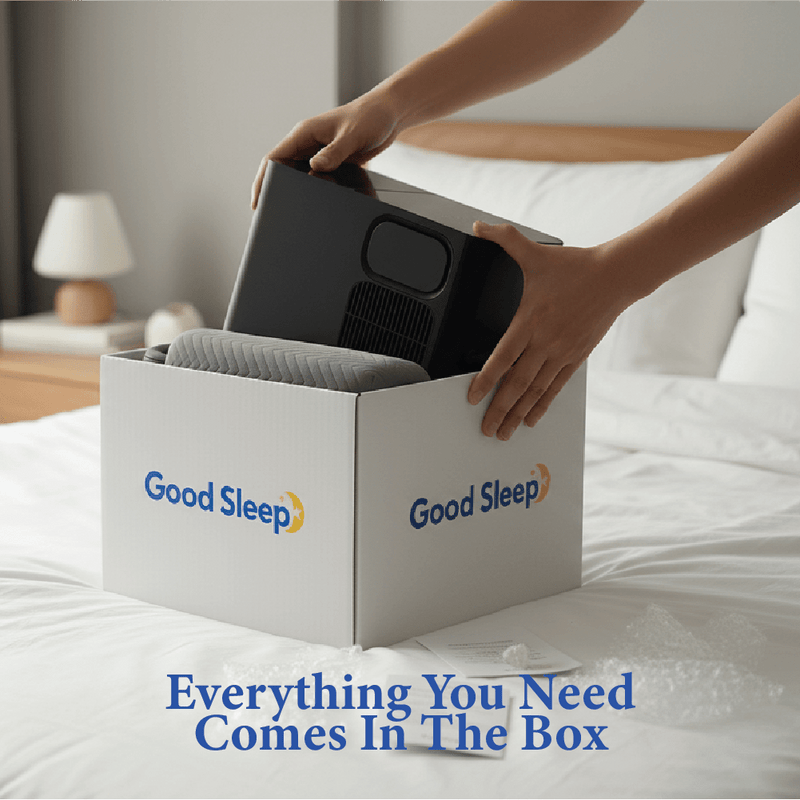
Good Sleep cooling and heating mattress topper
A water-based mattress topper that cools to 62°F and heats to 110°F and fits on top of the mattress you already have. Simple touch-panel control with no app, Wi-Fi or subscription. Dual zone on King.
Shop nowWhat “good sleep” actually means
Good sleep is not only about the number of hours you spend in bed. Researchers usually look at a few things together:
- Duration: whether you are getting enough total sleep for your age. Public health bodies such as the CDC recommend that most adults aim for at least seven hours a night.
- Continuity: whether your sleep is mostly unbroken, or fragmented by long or frequent awakenings.
- Timing: whether you sleep at roughly the same times each day, in step with your body clock.
- How you feel: whether you wake reasonably refreshed and stay alert through the day without relying on large amounts of caffeine.
You do not need a tracker to judge most of this. If you regularly need an alarm to drag yourself out of bed, fall asleep the moment you sit down in the afternoon, or feel foggy for much of the morning, there is probably room to improve. Most adults need seven or more hours a night, so if you regularly get less than that, start by protecting more time in bed.
Start with a steady wake-up time
If you only change one thing, make it your wake-up time. Getting up at about the same time every day, weekends included, is one of the most consistently recommended steps in sleep medicine.
Your body runs on an internal clock, the circadian rhythm, that times the release of hormones such as melatonin and influences when you feel sleepy and alert. A fixed wake time gives that clock a reliable anchor. Over a week or two, many people find they start getting sleepy at a more predictable hour in the evening as a result.
A few practical points:
- Pick a wake time you can keep on workdays and days off. A difference of an hour or so is fine; a three-hour weekend lie-in works against you.
- Do not try to “catch up” by staying in bed much longer after a bad night. A slightly earlier bedtime the following night is usually the better trade.
- Go to bed when you feel sleepy, not simply because the clock says so. Your bedtime will settle once your wake time is steady.
We cover this in detail in how to build a consistent sleep schedule.
Use light to set your body clock
Light is the strongest signal your body clock receives. Bright light in the morning tells your brain the day has started; dimmer, warmer light in the evening lets it wind down.

In practice that means:
- Get outside light early. Even on an overcast day, outdoor light is far brighter than ordinary indoor lighting. A short walk, coffee by an open window or a few minutes on the balcony all count.
- Dim the lights in the last hour or two before bed. Swap overhead lights for lamps where you can.
- Be thoughtful with screens late at night. The light matters, but so does the content: an exciting show or a stressful email thread can keep your mind busy long after you put the device down.
Our article on morning light and sleep explains how to fit this into a busy routine.
Make the bedroom cool, dark and quiet
Most people sleep best in a room that is cool, dark and quiet. Your core body temperature naturally falls as you drift off, and a warm, stuffy room can make that harder.
There is no single perfect number for everyone, but many sleep organisations suggest a room on the cooler side, somewhere in the mid-60s Fahrenheit (around 18 degrees Celsius) as a starting point. Adjust from there based on your bedding, what you wear to bed and whether you share the bed with someone who runs hot or cold.
Darkness matters too. Blackout curtains, a simple eye mask or covering small standby lights can all help. If noise is a problem, earplugs or a steady background sound such as a fan can mask sudden sounds.
For more on getting the temperature right, including options for couples with different preferences, see the best bedroom temperature for sleep.
Time caffeine and alcohol carefully
Caffeine blocks adenosine, a chemical that builds up while you are awake and helps create sleep pressure. Its effects can last for many hours, which is why an afternoon coffee can still be working at bedtime. Many clinicians suggest stopping caffeine by early afternoon, but sensitivity varies a lot from person to person.
Alcohol is trickier. It can make you feel drowsy and help you fall asleep faster, but it tends to disturb sleep later in the night, leading to lighter, more broken sleep and more trips to the bathroom.
You do not have to give up either one. Moving your last coffee earlier and leaving a few hours between your last drink and bedtime are easy experiments. Our guide to caffeine, alcohol and sleep walks through the details.
Build a wind-down routine
Your brain does not switch off like a light. A predictable 30 to 60 minute wind-down routine gives it a chance to shift gears.

Good wind-down activities are calm, enjoyable and done in dim light. Examples include:
- Reading a paper book or an e-reader with a warm, dim setting.
- A warm shower or bath. Many people find the cooling afterwards helps them feel sleepy.
- Light stretching or slow breathing exercises.
- Writing a short to-do list for tomorrow so you are not rehearsing it in bed.
The exact activities matter less than the consistency. Doing the same few things in the same order each night teaches your brain that sleep is coming. We share sample routines in how to build a bedtime wind-down routine.
Move your body during the day
Regular physical activity is linked with better sleep quality in many studies, and it is one of the few habits that improves health in so many other ways at the same time.
You do not need intense workouts. Walking, cycling, swimming, gardening and strength training all count. Some people find vigorous exercise close to bedtime leaves them wired, while others sleep fine after an evening session. Notice how you respond and adjust. See exercise and sleep for more.
Know what to do when you can’t sleep
Everyone has nights when sleep will not come. What you do next matters. Lying in bed for a long time, tossing, checking the clock and worrying, can teach your brain to associate the bed with frustration.
A common recommendation from behavioural sleep programmes is simple: if you have been lying awake for what feels like a long time, get up, go to another dim, quiet spot, do something calm until you feel sleepy, then return to bed. Keep the clock out of view.
If sleeplessness happens most nights for several weeks, it is worth speaking with a doctor. Cognitive behavioural therapy for insomnia (CBT-I) is the first-line treatment recommended by major medical organisations, and it is available in person and through structured digital programmes. Our guide what to do when you can’t sleep covers this step by step.
Get the bed itself right
A mattress that sags, pillows that leave your neck sore or bedding that traps heat can quietly undermine everything else. There is no single best mattress for everyone; comfort and support depend on your body, how you sleep and personal preference. If you want to cool the bed rather than the whole room, take a look at this option.
If you tend to sleep hot or your partner likes the room at a different temperature, a temperature-regulating mattress topper is one option to consider. Good Sleep, the company behind this site, makes the Good Sleep cooling and heating mattress topper, which lets you adjust the surface temperature of the bed. It is not a cure for sleep problems, and the free habits in this guide come first, but it can help if heat is what keeps waking you. Read more in how to set up your bed for better sleep.
A simple order to try things in
Trying everything at once is a recipe for giving up. Here is a sensible sequence:
| Week | Focus | What to do |
|---|---|---|
| 1 | Wake time | Get up at the same time every day, including weekends |
| 2 | Light | Get outdoor light within an hour of waking; dim lights in the evening |
| 3 | Caffeine and alcohol | Move your last coffee earlier; leave a gap between drinks and bed |
| 4 | Bedroom | Make the room cooler, darker and quieter |
| 5 | Wind-down | Build a 30 to 60 minute routine and keep it consistent |
Keep a simple note each morning: roughly when you went to bed, when you woke and how rested you feel on a scale of one to five. After a few weeks you will have a clear picture of what helps you.
When to talk to a doctor
Habits can do a lot, but they are not a substitute for medical care. Speak with a doctor if you:
- Snore loudly, gasp or stop breathing in your sleep (a bed partner may notice this first).
- Feel very sleepy during the day despite getting enough time in bed.
- Have trouble falling or staying asleep most nights for several weeks.
- Have uncomfortable sensations in your legs at night, or act out your dreams.
Conditions such as obstructive sleep apnea, restless legs syndrome and chronic insomnia are common and treatable.
Frequently asked questions
How long does it take to improve sleep habits?
Many people notice some change within one to two weeks of keeping a steady wake time and getting morning light, but body clocks adjust gradually. Give any single change at least a couple of weeks before deciding whether it works for you.
Is it bad to sleep in on weekends?
An occasional lie-in is not a disaster. Regularly sleeping in by several hours can shift your body clock later, though, which makes Sunday night and Monday morning harder. Keeping your wake time within about an hour of your weekday time is a good compromise.
Are sleep supplements a good idea?
Some supplements are widely used, but evidence for many of them is limited and they can interact with medicines. Talk to a doctor or pharmacist before starting one, and focus on the habits above first.
What is the single most important habit?
For most people, a consistent wake-up time combined with bright morning light gives the biggest return for the least effort.