How to Build a Consistent Sleep Schedule (and Actually Keep It)
Why a steady wake time matters more than a perfect bedtime, and a step-by-step plan for shifting your schedule without misery.

Ask a sleep specialist for one piece of advice and there is a good chance it will be some version of “keep a regular schedule”. It sounds almost too simple. But a consistent schedule works with your body’s internal clock instead of against it, and that makes nearly every other sleep habit easier.
This guide explains why regularity matters, then gives a practical plan for building a schedule you can actually keep, including what to do about weekends, late nights and travel.
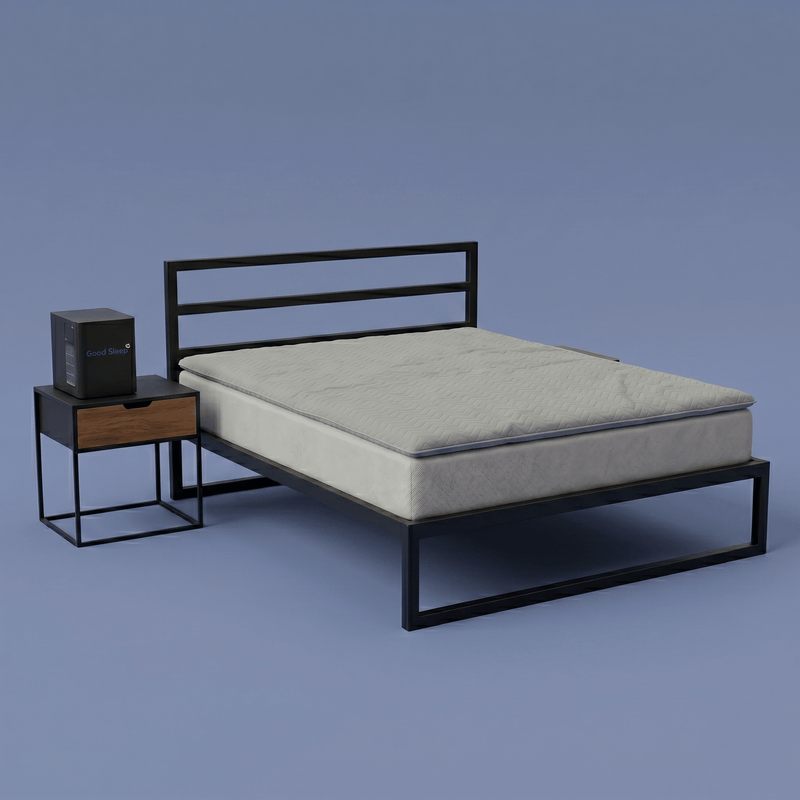
Good Sleep cooling and heating mattress topper
A water-based mattress topper that cools to 62°F and heats to 110°F and fits on top of the mattress you already have. Simple touch-panel control with no app, Wi-Fi or subscription. Dual zone on King.
Shop nowWhy regularity matters
Your body runs on a roughly 24-hour internal clock, the circadian rhythm. It helps time when you feel sleepy and alert, when hormones such as melatonin and cortisol rise and fall, and when your core body temperature dips. This clock is set mainly by light, and also by cues such as meal times, activity and social routine.
When your sleep times jump around, your internal clock gets mixed signals. Many people describe the result as feeling jet-lagged without leaving home. A large weekday-weekend gap is sometimes called “social jet lag” for exactly that reason.
Research has linked irregular sleep timing with poorer sleep and with various health measures, though separating cause and effect is hard. The practical point is simpler: most people find it easier to fall asleep and wake up when their schedule is steady.
Anchor your wake time first
It is tempting to focus on bedtime. But you cannot force yourself to fall asleep, while you can choose when you get up. That makes wake time the more reliable anchor.
Choose a wake time that fits your real life on both workdays and days off. Then:
- Set an alarm for that time every day, including weekends.
- Get up when it goes off, rather than snoozing repeatedly.
- Get bright light within the first hour, ideally outdoors. See morning light and sleep.
- Keep this up for at least two weeks before judging the results.
At first you may feel more tired, especially if you were sleeping in on weekends. That tiredness builds sleep pressure, which tends to make you sleepier at a reasonable hour in the evening. Over time, bedtime often settles into place on its own.
Let bedtime follow sleepiness
Once your wake time is steady, work out a target bedtime by counting back from it. Most adults need at least seven hours of sleep, and you will spend some time falling asleep, so allow a little extra. For example, if you get up at 6:30 a.m. and want about seven and a half hours in bed, your target would be around 11 p.m.
Treat this as a guide rather than a rule. If you are not sleepy at your target time, it is usually better to wait until you are than to lie in bed wide awake. Use the time before bed for your wind-down routine in dim light.
How to shift your schedule gradually
If your current schedule is far from where you want it, big jumps rarely work. A gradual shift is easier on your body clock.
| Step | What to do | How long |
|---|---|---|
| 1 | Move wake time 15 to 30 minutes earlier | 3 to 4 days |
| 2 | Get bright light right after waking | Every day |
| 3 | Dim lights and screens earlier in the evening | Every day |
| 4 | Move wake time another 15 to 30 minutes | Next 3 to 4 days |
| 5 | Repeat until you reach your goal | As needed |
Shifting later is usually easier than shifting earlier for most people, which is why early starts take more patience. Light is your main tool: bright light in the morning helps you shift earlier, while bright light late in the evening tends to push you later.
Weekends without wrecking the week
Weekends are where most schedules fall apart. A late night out followed by a long lie-in on Saturday and Sunday can leave you struggling to sleep on Sunday night and dragging on Monday.
Some practical compromises:
- Keep your weekend wake time within about an hour of your weekday time. You can still go to bed later sometimes; you will just be a bit more tired, which is fine.
- Use a short early-afternoon nap instead of a long lie-in if you are short on sleep. Around 20 minutes is plenty for most people. See our napping guide.
- Get outside in the morning. Morning light on weekends helps keep your clock from drifting.
Late nights, early starts and other real-life problems
Life does not always cooperate. Here is how to handle common disruptions.
One late night. Get up at your usual time anyway, get morning light and go to bed a little earlier the next night if you feel sleepy. One short night is usually easy to recover from.
An early flight or start. Go to bed somewhat earlier the night before if you can, but don’t expect to fall asleep hours earlier than normal. Accept a shorter night and recover over the next day or two.
Shift work. Rotating or night shifts make a regular schedule very hard. Blackout curtains, keeping consistent sleep times on work days, and speaking with a doctor about shift work sleep problems can all help.
Kids and caregiving. When others wake you, aim for consistency where you can control it, mostly your wake time and wind-down, and be kind to yourself about the rest.
Making it stick
A few habits make a steady schedule much easier to keep:
- Put your alarm across the room so you have to get up to turn it off.
- Plan something you enjoy for the first part of the morning, such as a favourite coffee by the window or a short walk.
- Track it lightly. A simple note each morning of when you got up and how you feel shows progress without becoming a chore.
- Protect your evenings. If work or social plans regularly push your bedtime late, look at what you can move earlier.
When a regular schedule isn’t enough
If you have kept a steady schedule for several weeks and still struggle to fall asleep at a normal hour, or wake far too early, it may be worth discussing with a doctor. Circadian rhythm disorders, such as delayed sleep-wake phase disorder, are real conditions and there are treatments that can help. Persistent insomnia also has effective treatments, especially cognitive behavioural therapy for insomnia (CBT-I).
For the bigger picture, see our main guide on how to get good sleep.
A sample two-week plan
Here’s what the first two weeks might look like for someone who wants to wake at 6:30 a.m. but currently drifts between 6:30 on weekdays and 9:30 on weekends.
Week 1. Set the alarm for 6:30 a.m. on weekdays and 7:30 a.m. on the weekend. Step outside for ten minutes after waking every day. Start winding down around 10:15 p.m. and go to bed when sleepy, aiming for about 11 p.m.
Week 2. Move the weekend alarm to 7 a.m. Keep the morning light and the wind-down. If you feel very tired in the afternoon, take a short nap of around 20 minutes, finishing by mid-afternoon.
By the end of the second week, many people find they feel sleepy at a more predictable time and wake more easily. If you don’t, give it another week before changing anything else.
Key takeaways
- A steady wake time is the most reliable anchor for your body clock.
- Let bedtime follow sleepiness rather than forcing yourself to sleep.
- Shift your schedule gradually, by 15 to 30 minutes every few days.
- Keep weekend wake times within about an hour of weekdays.
- Use morning light and evening dimness to help your clock adjust.
Related guides
If you found this useful, these guides go deeper on closely related topics:
- The Best Bedroom Temperature for Sleep (and How to Get There): why a cooler room helps and how to cool a hot bedroom.
- Caffeine, Alcohol and Sleep: How to Enjoy Both Without Wrecking Your Night: how to time coffee and drinks so they don’t cost you sleep.
- How to Build a Bedtime Wind-Down Routine That Works: sample 30 to 60 minute routines for different lifestyles.
- What to Do When You Can’t Sleep: A Calm, Step-by-Step Plan: what to do in the moment and the CBT-I techniques for the long term.
Each one sticks to the same approach as this article: practical steps, plain language and no miracle cures. Pick the one that matches the part of your sleep you most want to improve, try one change at a time and give it a couple of weeks.
A cool, comfortable bed helps you stay asleep through the second half of the night. One water-based topper that cools to 62°F with no app is listed at trygoodsleep.com.
Frequently asked questions
Does it matter what time I go to bed, as long as I get enough hours?
For most people, regular timing helps as much as total hours. Sleeping from midnight to 8 a.m. every night is generally easier on your body than switching between 10 p.m. and 2 a.m. bedtimes, even if the total is similar.
How long does it take to adjust to a new schedule?
It varies. Shifting by an hour or so often takes a few days to a week if you use morning light consistently. Larger shifts can take a few weeks.
Should I go to bed early to catch up after a bad night?
A slightly earlier bedtime is fine if you feel sleepy. Going to bed hours early and lying awake usually makes things worse. Keep your wake time steady and let sleep pressure do the work.
Is it OK to sleep in on my day off?
An occasional lie-in is fine. Regularly sleeping in by two or three hours tends to shift your body clock later, which makes the next workday harder.
What if I’m a natural night owl?
People really do vary in their natural timing, known as chronotype. You may never love early mornings, but a consistent schedule with morning light still helps night owls feel better on the times they have to keep.