How to Set Up Your Bed for Better Sleep
Mattress, pillows, bedding and temperature: how to tell if your bed is working against you and what to change first.
You spend roughly a third of your life in bed, yet most people put more thought into choosing a sofa. A bed that’s too soft, too firm, too hot or simply worn out can quietly undermine your sleep, even if every other habit is in place.
This guide walks through each part of the bed, explains how to tell whether it’s working for you, and suggests what to change first. There’s no single “best” setup, because comfort depends on your body, how you sleep and your personal preferences.
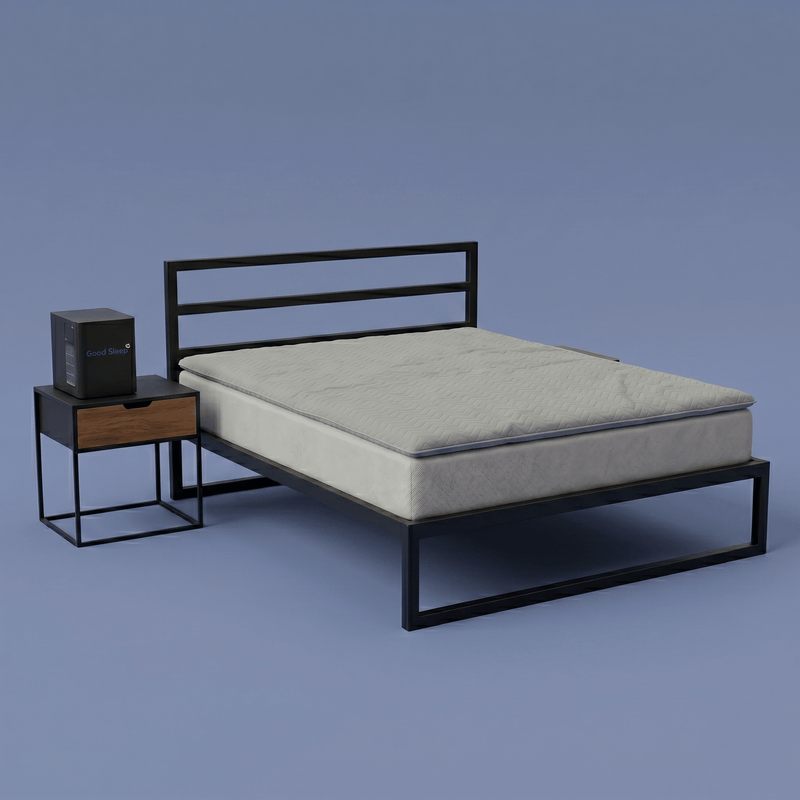
Good Sleep cooling and heating mattress topper
A water-based mattress topper that cools to 62°F and heats to 110°F and fits on top of the mattress you already have. Simple touch-panel control with no app, Wi-Fi or subscription. Dual zone on King.
Shop nowWho this guide is for
This guide is for anyone who suspects their bed might be part of their sleep problem. Maybe you wake up stiff, toss and turn to find a comfortable position, run hot under the covers or share the bed with someone who has very different preferences. You don’t need to replace everything at once. Often, a few inexpensive changes to pillows and bedding make a real difference, and you can decide later whether a bigger purchase is worth it. If you have ongoing back or neck pain, a doctor or physiotherapist can give advice specific to you.
Signs your bed is affecting your sleep
Consider whether your bed might be part of the problem if you:
- Wake up stiff or sore and feel better after moving around.
- Sleep better in hotel beds or guest rooms.
- Notice dips, lumps or sagging in the mattress.
- Wake up hot or sweaty even when the room is cool.
- Are disturbed every time your partner moves.
- Can’t remember when you last replaced your pillows.
The mattress
The mattress is the biggest piece of the puzzle. Its main jobs are to support your spine in a fairly neutral position and to feel comfortable enough that you can relax.
Firmness. There’s no universally ideal firmness. Some research has suggested medium-firm mattresses work well for many people with back pain, but personal preference varies. As a rough guide:
| Sleeping position | Often prefers | Why |
|---|---|---|
| Side | Softer to medium | Lets shoulders and hips sink in a little |
| Back | Medium to medium-firm | Supports the lower back |
| Stomach | Firmer | Helps prevent the hips sinking |
| Combination | Medium | Balances support and comfort |
Materials. Memory foam contours closely and reduces motion transfer but can feel warm. Innerspring and hybrid mattresses usually allow more airflow. Latex tends to feel bouncy and responsive. None is best for everyone.
Age and condition. Mattresses don’t last forever. If yours is sagging or lumpy, or you sleep noticeably better elsewhere, it may be time to replace it.
Trying before committing. Many retailers offer trial periods. Check the terms carefully, including return costs.
Mattress toppers
A topper sits on top of your mattress and can change how it feels. It can be a lower-cost way to soften a firm mattress or add comfort. It won’t fix a mattress that’s badly sagging, though. If you have tried the basics and still wake up warm, a cooling topper with a simple touch panel is a low-fuss way to cool the bed itself.
Some toppers focus on temperature. Breathable materials can help a bed feel cooler, and some toppers actively heat or cool the surface. Good Sleep, the company behind this site, makes the Good Sleep cooling and heating mattress topper, which lets you set the bed temperature and can be useful for hot sleepers or couples who disagree about temperature. We make it, so we’re not neutral; consider it alongside the free options in our bedroom temperature guide.
Pillows
Your pillow’s job is to keep your head and neck roughly in line with your spine.
- Side sleepers often need a higher, firmer pillow to fill the gap between the shoulder and head.
- Back sleepers often do well with a medium-height pillow.
- Stomach sleepers usually need a thin pillow, or none, to avoid bending the neck back.
Pillows lose their shape and collect dust mites over time. If your pillow stays folded when you fold it in half, or it’s lumpy and flat, consider replacing it. Washable pillows and pillow protectors help keep them fresh.
Sheets and bedding

Sheets. Breathable natural fibres such as cotton and linen tend to feel cooler and absorb moisture well. Some people prefer the smooth feel of sateen or the crispness of percale. Thread count matters less than marketing suggests.
Duvets and blankets. Choose weight based on your room and your body temperature. Layers give you flexibility. Separate duvets can help couples with different preferences.
Washing. Washing sheets regularly, often weekly, keeps the bed fresh, which many people find makes it more inviting.
Keeping the bed cool
If you sleep hot:
- Use breathable sheets and a lighter duvet.
- Choose a breathable mattress protector.
- Consider a cooler mattress or topper design.
- Keep the room cool and use a fan. See the best bedroom temperature for sleep.
- Wear light, breathable sleepwear, or none.
Couples and the shared bed
Sharing a bed brings its own challenges: different temperature preferences, movement, snoring and different schedules. Some ideas:
- A larger bed reduces disturbance, if space allows.
- Mattresses with low motion transfer help if one partner moves a lot.
- Separate duvets solve “blanket wars”.
- Dual-zone temperature helps when one runs hot and the other cold.
- Earplugs or white noise help with snoring, but loud snoring can also be a sign of sleep apnea and is worth checking with a doctor.
Beyond the bed
The bed works alongside the room around it. Keep the bedroom dark, quiet and uncluttered where you can. Charge phones away from the bed. A calm space makes your wind-down routine more effective.
What to change first
If you’re not sure where to start, work from cheapest to most expensive:
- Adjust bedding layers and switch to breathable sheets.
- Replace old or unsuitable pillows.
- Add a mattress protector or topper to change feel or temperature.
- Replace the mattress if it’s worn out or clearly unsuitable.
Common mistakes
Buying on firmness labels alone. “Medium” can mean very different things across brands.
Ignoring pillows. A good mattress with the wrong pillow can still leave you with a stiff neck.
Expecting a new bed to fix everything. It can help a lot, but habits such as a consistent sleep schedule still matter.
Waiting too long. If your bed is clearly sagging, putting off replacing it can cost you many nights of poor sleep.
For the full picture, see our main guide on how to get good sleep.
Shopping for a new mattress
If you decide it’s time for a new mattress, a few steps can help you choose well:
- Know your sleeping position and any aches you want to address.
- Set a budget, remembering that a mattress is used every night for years.
- Test in person if you can. Lie in your usual sleeping position for several minutes, not just a quick sit.
- Read the trial and return terms carefully. Some trials require you to keep the mattress for a minimum period before returning it, and some charge a pick-up fee.
- Check the warranty and what it actually covers. Body impressions below a certain depth are often excluded.
- Give it time. A new mattress can take a few weeks to feel normal, especially if it’s very different from your old one.
Caring for your bed
A little care keeps your bed comfortable for longer:
- Use a washable mattress protector to protect against spills and sweat.
- Rotate the mattress if the manufacturer recommends it.
- Wash sheets regularly and pillowcases more often if you have oily skin or acne.
- Air the bed in the morning by pulling back the covers for a while before making it.
- Wash or replace pillows according to their care labels.
Key takeaways
- The best mattress and pillow depend on your body, sleeping position and preferences.
- Breathable sheets and layered bedding help with temperature control.
- Toppers can change feel or temperature but can’t fix a worn-out mattress.
- Start with cheap changes and work up to bigger purchases.
Related guides
If you found this useful, these guides go deeper on closely related topics:
- How to Get Good Sleep: A Practical, No-Hype Guide: our main guide to getting good sleep, with the habits that matter most and the order to try them.
- How to Build a Consistent Sleep Schedule (and Actually Keep It): how to anchor your wake time and shift your schedule without misery.
- Morning Light and Sleep: The Free Habit That Resets Your Body Clock: how daylight resets your body clock, even on busy or grey days.
- Exercise and Sleep: How Moving More Can Help You Rest Better: how regular movement supports better rest, and when to work out.
Each one sticks to the same approach as this article: practical steps, plain language and no miracle cures. Pick the one that matches the part of your sleep you most want to improve, try one change at a time and give it a couple of weeks.
Frequently asked questions
How do I know if I need a new mattress?
Signs include visible sagging, lumps, waking up stiff or sore, sleeping better elsewhere and the mattress simply being old. Comfort and condition matter more than a fixed number of years.
Is a firm mattress better for your back?
Not necessarily. Some research suggests medium-firm mattresses work well for many people with back pain. The best choice depends on your body and sleeping position.
Can a mattress topper fix a bad mattress?
A topper can change how a mattress feels and help with comfort or temperature, but it can’t fix a mattress that is badly sagging or broken down.
How often should I replace my pillow?
When it’s flat, lumpy or doesn’t spring back after folding. Many people replace pillows every year or two, depending on the type and how well they’re cared for.
What sheets are best for hot sleepers?
Breathable natural fabrics such as cotton percale and linen are popular choices for hot sleepers.